
Block Paving Norwich
Block paving driveways
Block Paving Norwich lays new block paved driveways for homes in Norwich and across Norfolk, built on a properly dug and compacted base so the surface stays level under the weight of cars.
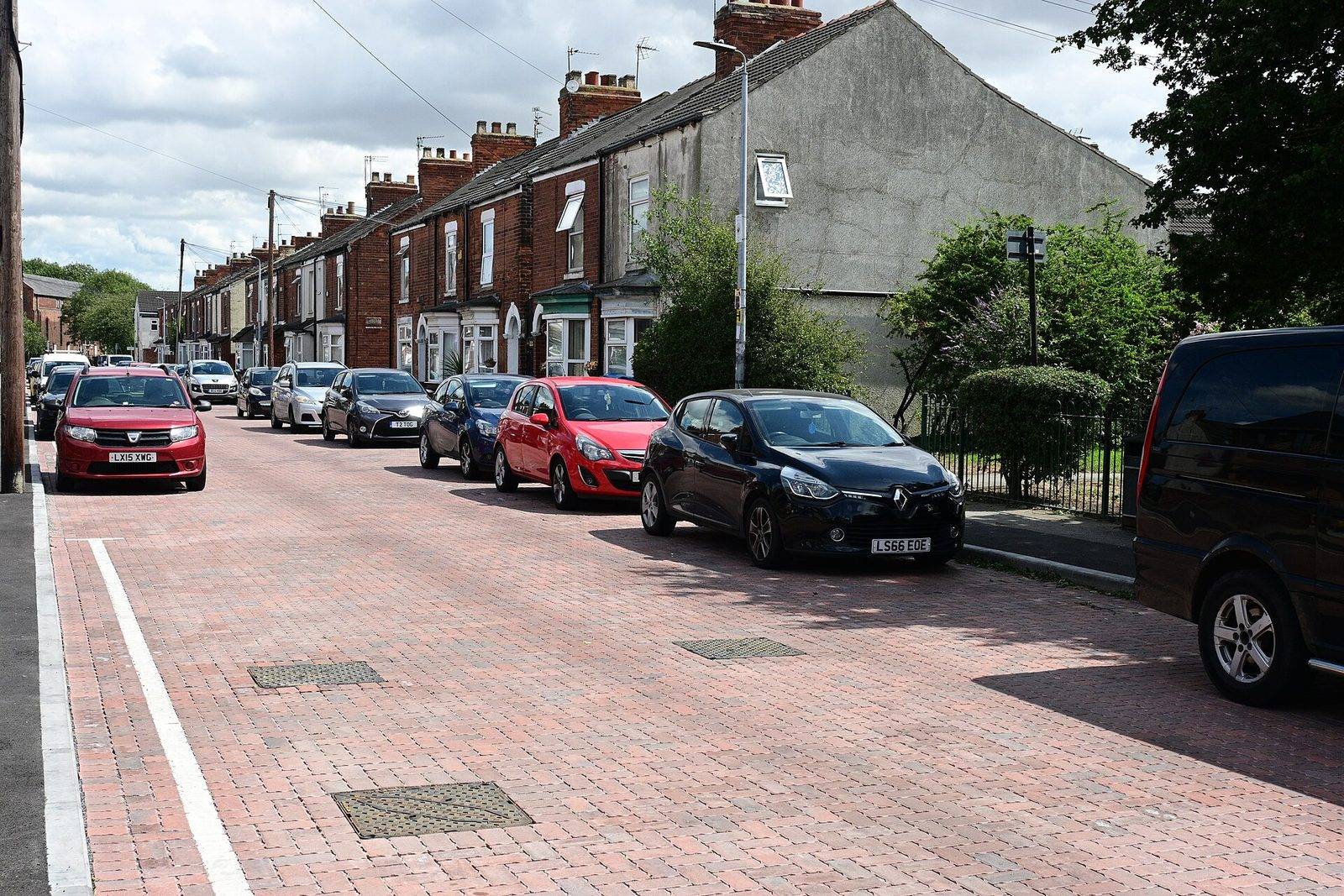
About block paving driveways
A block paved driveway is made of hundreds of small concrete or clay blocks laid tightly together and locked in place by sand in the joints and a firm edge around the outside. Because each block can move very slightly with its neighbours, a well built block paved drive copes with the weight of cars, frost and the small ground movements every garden has, without cracking the way a single slab of concrete can.
It suits most homes: a single drive beside a semi, a wide frontage for two or three cars, or a sweep up to a detached house. The blocks come in a wide range of colours, sizes and textures, from smooth grey concrete to tumbled, aged blocks and clay pavers, and the pattern and border can be chosen to suit the house. Where a front garden is being paved over, the drainage rules mean it often makes sense to look at permeable block paving instead, which we also lay.
What decides how long a driveway lasts is the construction under it. We dig out to a depth that allows for a compacted stone sub-base suited to the ground and the vehicles using it, lay a screeded bed of sharp sand, then lay the blocks, usually in herringbone for a driveway, before cutting in, vibrating and sanding the joints.
What is included
Everything a new block paved driveway needs, from the ground up.
- Clearing and digging outLifting the old surface or turf and digging out to the depth the sub-base needs, with the spoil taken away.
- Compacted sub-baseCrushed stone laid in layers and compacted with a plate compactor to form a firm, level base.
- Edge restraintsKerbs or edging blocks set in concrete around the outside so the paving cannot spread.
- Sand bed and layingA screeded bed of sharp sand and the blocks laid in the agreed pattern, usually herringbone for a driveway.
- Cutting inBlocks cut neatly around edges, drains, manholes and the house.
- Drainage and fallsThe surface laid to a fall so water runs away from the house to a drain, channel or soakaway.
- FinishingThe paving vibrated in and kiln-dried sand brushed into the joints, then the site cleared up.
Choose your laying pattern
Which block paving pattern suits your drive?
The pattern changes how a driveway looks and how well it holds together under turning cars. These are the four laid most often.
-
Herringbone at 45 degrees
Blocks set in a zigzag at 45 degrees to the house. Every block is locked by its neighbours, so turning wheels cannot push rows apart. The usual choice for driveways, with more cutting at the edges.
-
Herringbone at 90 degrees
The same interlocking zigzag, set square to the house. It holds as well as the 45 degree version, reads a little more formal and needs fewer angled cuts along straight edges.
-
Basketweave
Pairs of blocks laid side by side, each pair turned against the next. Decorative and traditional, but it interlocks less under turning cars, so it suits paths and patios better than busy drives.
-
Stretcher bond
Straight rows offset like brickwork. Simple, calm and quick to lay with few cuts. Best laid across the direction cars travel, and a common choice for paths, patios and borders.
What to plan before you book
A few things worth thinking about before the work is priced.
How it will be used
Tell us how many cars park on it, whether vans or heavier vehicles use it, and whether it needs room to turn. That decides the depth of the sub-base.
Drainage
Water has to go somewhere. Think about where it runs now, whether there is a drain at the boundary and whether permeable paving or a channel drain would be better.
Planning and the dropped kerb
Paving over a front garden of more than five square metres needs planning permission unless it is permeable or drains to a lawn or border. A new or wider dropped kerb is a separate application to Norfolk County Council.
Levels and the damp course
The finished surface should sit well below the damp proof course of the house, usually by at least two brick courses, so check the levels by the front door.
Style and colour
Have a look at block paving near you. A border in a contrasting colour, the size of the block and the pattern change the look a great deal.
Good to know
Herringbone for cars
A 45 or 90 degree herringbone pattern interlocks in every direction, which is why it is the standard choice where cars turn and brake.
New paving can show white bloom
Concrete blocks sometimes show a white bloom called efflorescence in the first months. It is a natural salt from the concrete and weathers away on its own.
Sand settles in
Kiln-dried sand in the joints settles in the first weeks. Topping it up once the joints have settled helps the blocks stay locked together.
Manholes and drains
Inspection covers can be replaced with recessed trays so they are filled with matching blocks and blend into the driveway.
Weeds come from above
Most weeds in block paving grow from seeds that land in the joints, not from below. Regular sweeping keeps them down.
How it works
-
Step 1: Enquiry
You tell us about the driveway through the enquiry form.
-
Step 2: Visit
We measure the area, check levels, access and drainage, and talk through blocks, patterns and borders.
-
Step 3: Price
You get a written price for the agreed work.
-
Step 4: Build
We dig out, build the sub-base, set the edging and lay the blocks.
-
Step 5: Finish and handover
We sand the joints, clear up and walk the finished driveway with you.
Questions customers ask
How deep does a block paving driveway need to be?
It depends on the ground and the vehicles, but a driveway for cars normally needs a compacted stone sub-base under a sand bed and the blocks themselves. Soft or clay ground needs more. We set the depth after looking at the site.
Can you lay block paving over my old concrete or tarmac drive?
Sometimes, if the old surface is sound, level and drains properly, but often the better job is to take it up so the levels and falls can be set correctly. We will tell you which applies after seeing it.
Do I need planning permission?
For a front garden in England, a new hard surface over five square metres needs planning permission unless it is permeable or drains onto a lawn or border within your property. A dropped kerb needs separate permission from the highway authority.
Concrete or clay blocks?
Concrete blocks come in the widest choice of colours, sizes and textures. Clay pavers hold their colour for longer and have a traditional look, but cost more and are harder to cut.
When can I drive on it?
Block paving can normally be walked and driven on once it has been vibrated and sanded, because there is no concrete to cure. We will confirm on the day.
What is the white powder on my new paving?
That is efflorescence, a natural salt that comes out of new concrete blocks. It is harmless and fades with rain and time.
Other block paving work we do
-
Block paved patios
Block paved patios and seating areas for back gardens, laid to fall away from the house.
-
Permeable block paving
Paving that lets rain soak through the joints, for front gardens where drainage matters.
-
Block paving repairs and relaying
Lifting and relaying sunken, rocking or broken areas of an existing block paved surface.
-
Block paving cleaning and re-sanding
Cleaning tired block paving, clearing weeds and moss, and re-sanding the joints.
Get a quote
Tell us about the area and where you are in Norfolk, and we'll come back to you to talk it through.