
Block Paving Norwich
Permeable block paving
Block Paving Norwich lays permeable block paving in Norwich and across Norfolk: driveways and hard standings that let rain soak through the joints into the ground below instead of running off into the road.
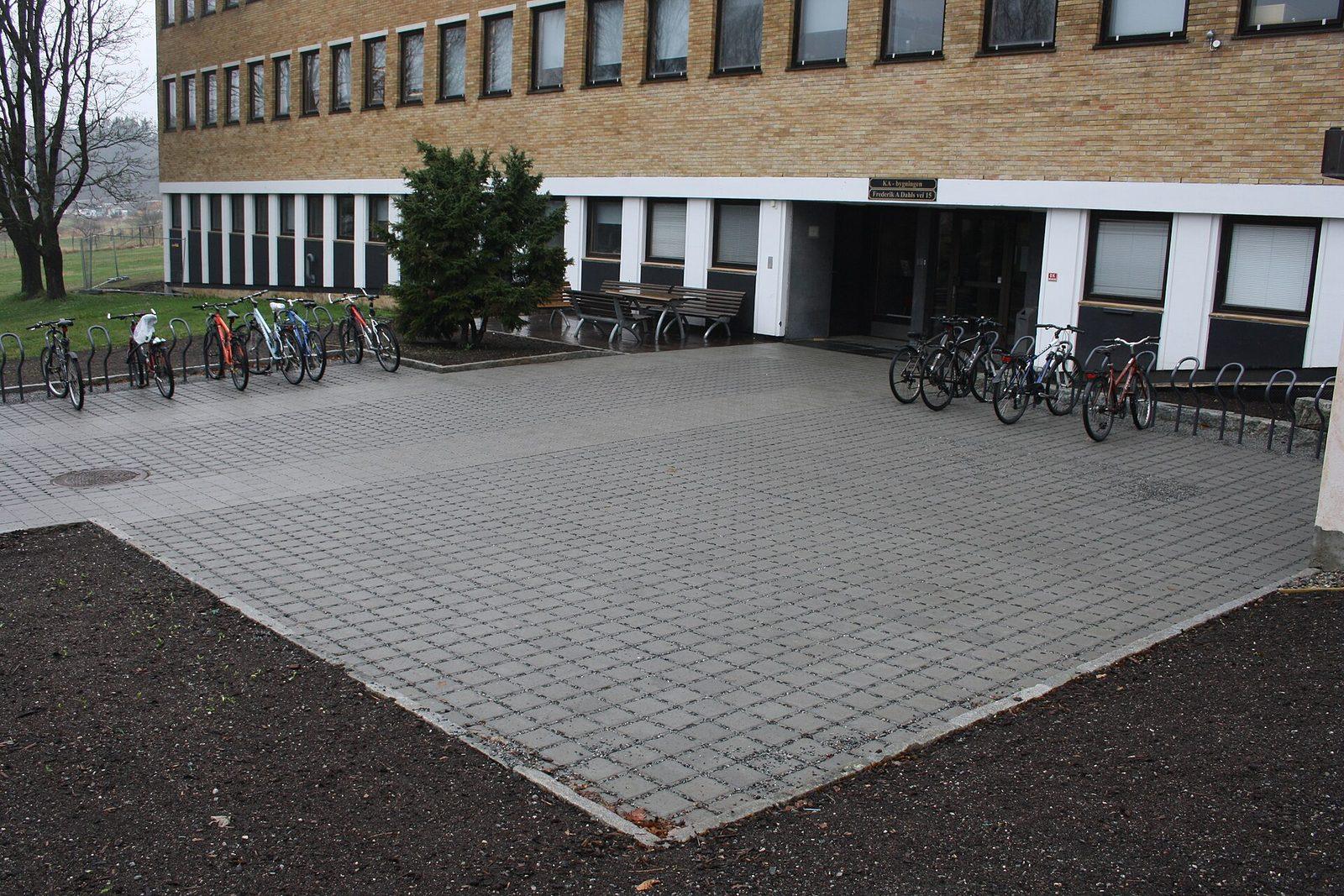
About permeable block paving
Permeable block paving looks much like ordinary block paving, but it is built to let water through. The blocks have small spacers that leave wider joints, the joints are filled with fine angular grit instead of sand, and underneath there is an open-graded stone sub-base with spaces between the stones that holds rainwater while it soaks into the ground.
It is the usual answer for front gardens. In England, a new or replacement hard surface over five square metres in a front garden needs planning permission unless it is permeable or drains onto a lawn or border within the property. A permeable driveway is designed to meet that rule, and it eases the load on drains during heavy rain.
It is not right for every site. On heavy clay that barely drains, or where the ground is contaminated, the water may need to be collected and taken to a drain or soakaway instead of soaking away beneath the driveway. That is something we look at when we visit.
Planning permission checker
Do I need planning permission for my driveway?
Answer three questions to see how the rule for front gardens applies to your plans.
For a house in England, a new or replacement hard surface in a front garden does not need planning permission if it is permeable, or if rainwater runs off onto a lawn or border to soak away. An area of 5 square metres or less does not need permission either. A surface over 5 square metres that is not permeable and drains onto the road or into the drains does need planning permission. Back gardens are not covered by this rule.
This is a guide to the rule for houses in England, not legal advice. Check with your local planning authority if your home is listed, in a conservation area, a flat or maisonette, or covered by an article 4 direction, and ask the council's highways team before a kerb is dropped to reach a new drive.
What is included
What goes into a permeable block paved driveway or hard standing.
- Site checkA look at the ground, levels and where water goes now, so the right build-up can be chosen.
- Digging outExcavating to the depth the permeable sub-base needs, with the spoil taken away.
- GeotextileA membrane laid where needed to stop the sub-base mixing with the ground beneath.
- Open-graded sub-baseClean crushed stone with no fine material, laid and compacted to hold and pass water.
- Laying courseA bed of fine clean grit in place of sharp sand.
- Permeable blocksBlocks with built-in spacers laid in the agreed pattern and cut in at the edges.
- Edge restraints and jointingEdging set firm and the joints filled with fine grit, then the surface vibrated in.
What to plan before you book
A few things worth thinking about before the work is priced.
Planning
If you are paving a front garden over five square metres, permeable paving is the usual way to avoid needing planning permission. If in doubt, check with Norwich City Council or your district council.
Your ground
Sandy and gravelly ground drains well. Heavy clay drains slowly and may need an overflow to a drain or soakaway.
Use and loading
Tell us what will park on it. The depth of the sub-base depends on the vehicles.
Trees and roots
Roots near the driveway affect the dig and the ground beneath. Tell us about nearby trees.
The look
Permeable blocks come in many of the same colours and textures as standard blocks, so you rarely have to give up the look you want.
Good to know
Grit, not sand
Permeable joints are filled with fine grit. Brushing ordinary sand into them clogs the joints and stops the water getting through.
Keep the joints open
Silt, leaves and moss can slowly block the joints. Sweeping regularly and an occasional vacuum sweep or clean keep it working.
Avoid soil and mulch
Barrowing soil or bark across the surface or piling it on the paving washes fines into the joints.
It looks like normal block paving
From a distance most people cannot tell a permeable driveway from a standard one.
Not for oil spills
Fuel or oil spilled on a permeable surface soaks into the ground, so leaks should be dealt with quickly.
How it works
-
Step 1: Enquiry
You tell us about the front garden or driveway through the enquiry form.
-
Step 2: Visit
We check the ground, levels, drainage and what will park on it.
-
Step 3: Price
You get a written price for the build-up and blocks we agree.
-
Step 4: Build
We dig out, lay the membrane and open-graded sub-base, then the grit bed and blocks.
-
Step 5: Finish and handover
We fill the joints with grit, clear up and explain how to keep the paving draining well.
Questions customers ask
What makes block paving permeable?
Wider joints filled with fine grit and an open-graded stone sub-base let rain pass between the blocks and soak into the ground below.
Do I need permeable paving for my front garden?
If the new hard surface in a front garden is over five square metres and the water does not run off onto a lawn or border, it needs planning permission unless it is permeable.
Does permeable paving work on clay?
It can, but clay drains slowly, so the sub-base may need an outlet to a drain or soakaway to take the water away in heavy rain.
Is it as strong as ordinary block paving?
Built to the right depth for the vehicles using it, a permeable driveway carries cars just as a standard one does.
How do I maintain permeable paving?
Sweep it regularly, keep soil and leaves off it and top up the joints with grit, not sand. Joints that have silted up can be cleaned out and refilled.
Will it look different from normal block paving?
Very little. The joints are a little wider, but the blocks come in similar colours and textures.
Other block paving work we do
-
Block paving driveways
New block paved driveways, from the dig-out and sub-base to the last swept joint.
-
Block paved patios
Block paved patios and seating areas for back gardens, laid to fall away from the house.
-
Block paving repairs and relaying
Lifting and relaying sunken, rocking or broken areas of an existing block paved surface.
-
Block paving cleaning and re-sanding
Cleaning tired block paving, clearing weeds and moss, and re-sanding the joints.
Get a quote
Tell us about the area and where you are in Norfolk, and we'll come back to you to talk it through.